
Educators were concerned about youth mental health even before the COVID-19 pandemic. The isolation and lost learning time only exacerbated the issue and brought it to the top of their list of concerns. A 2022 survey of parents with children under 18 revealed that most are “extremely worried about their child struggling with depression or anxiety — with good reason! 37% of high school students at both public and private schools report that the state of their mental health was not good most, if not all, of the time during the pandemic, and 44% of high school students revealed that they had felt sad or hopeless nearly every day for a period of two or more consecutive weeks, which affected their daily activities (CDC survey). Students in marginalized groups are also dealing with the psychological impacts of discrimination, and the CDC reports that depressive symptoms and suicidal thoughts are higher for female, LQBTQ+, and Black and Hispanic students.
Many schools and communities are working to address youth mental health concerns by promoting mental health literacy and investing in trauma-informed healing practices, like restorative justice. Students’ space and environment are also proven to affect their mental well-being; however, many school buildings have old or deteriorating infrastructure, overcrowded spaces, or lack safe, accessible places for students to self-regulate or decompress. These spaces can hinder other efforts to address student  mental health issues. Improving students’ learning environments is a central aspect of Heart of America’s mission. We know that having a fresh, welcoming space to learn in contributes to a student’s sense of self-worth. We’re focused on creating spaces that make students feel valued and prioritized, and we do this work with mental health in mind.
Kids need a place to be kids! They should have a place where they feel comfortable expressing and addressing their emotions. Each child is different, and it’s important that schools provide students with the choice of various spaces in a school environment. Natural, play-focused spaces, soothing wellness rooms, and generally welcoming hues and materials have all been linked to improved student mental health. Access and exposure to green spaces can improve adolescent mental health through “reduced stress, positive mood, less depressive symptoms, better emotional well-being, improved mental health and behavior, and decreased psychological distress[,]” so we’ve been planting and maintaining vegetation like trees, bushes, and school/community gardens to ensure students have green spaces on their school grounds. Often this greenery is incorporated into play-focused spaces that encourage physical activity, like refreshed outdoor and indoor play spaces.
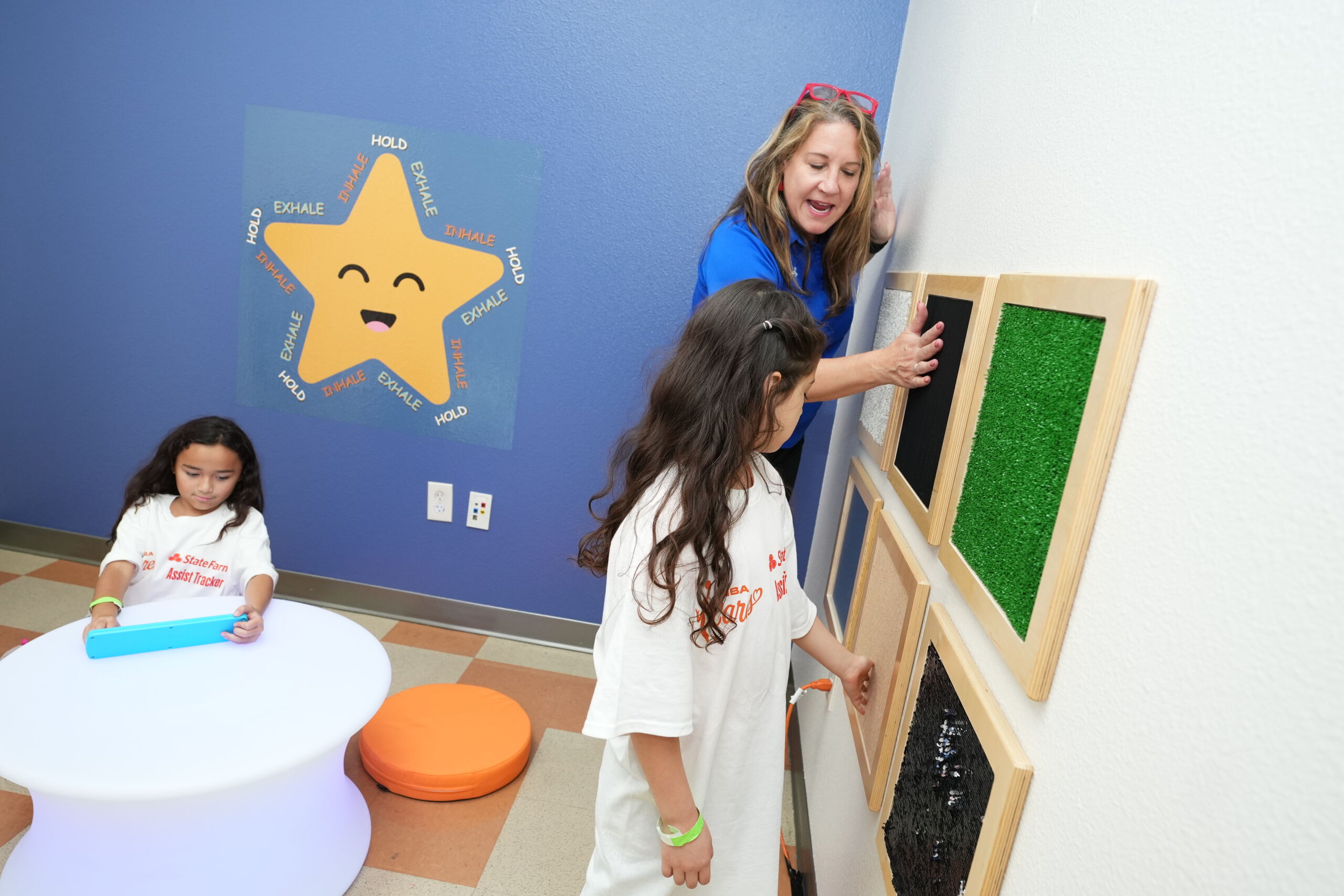
We all know how overstimulating schools can be… overlapping conversations, ringing bells, tech sounds, loudspeakers, florescent lights. If you’re struggling with a personal mental health issue or fighting with your best friend, the halls of your high school probably are not the most comfortable place to be. In her book Schools That Heal, Clare Latané identifies “soothing surroundings, visual depth, and varied interest” as factors that allow students nervous systems to rest, opening them up to “interacting with other people, have a greater sense of well-being, and have better brain function” (3). Wellness rooms, also called zen dens, are quiet spaces that some schools offer students as a place to decompress and practice emotional regulation.
In all our school transformations, we carefully select materials for each space and create colorful, visually interesting designs, but this is especially important for projects centered on students’ mental health. Here are some of our best practices when designing wellness spaces:
- Tailor the spaces to fit the unique needs of the students and their communities. Our Innovation Lead, Korie Enyard, says that “Recognizing that the communities we serve are unique and have specific needs informs my approach to wellness and our overall work[…] Every child is special and deserves empathy.”
- Consider the room’s ambiance. In the words of Jabun Nahar, Interior Designer at Heart of America, “We design wellness rooms to evoke a calm, soothing, and relaxing atmosphere.”
- Elevate spaces with soft color palettes and tranquil graphic wallpaper.
- Select ergonomic furniture and arrange it for maximum comfort.
- Include calming sound effects and elements of nature.
Whether it’s a zen den, a community playground, or a library, we’re always thinking about creating comfortable, welcoming spaces for students.